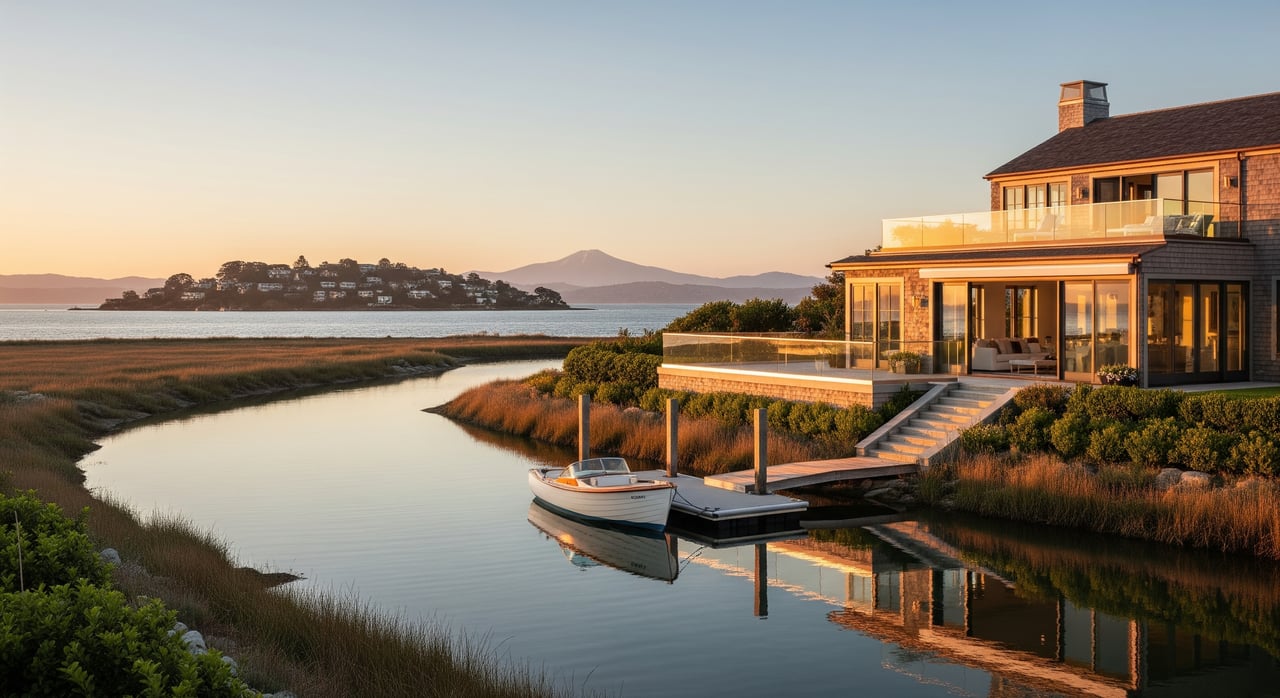
Open-bay drama or sheltered, glassy water? If you are deciding between Belvedere Island and the Belvedere Lagoon, you are weighing two very different but equally compelling waterfront lifestyles. You want the right fit for boating, sun, privacy, and long-term value. In this guide, you will compare the daily experience, risks, and buying considerations so you can choose with confidence. Let’s dive in.
Belvedere at a glance
Belvedere sits on the Tiburon Peninsula in Marin County, with Belvedere Island forming much of the city and the nearby lagoon neighborhood closely connected to the Tiburon/Belvedere community. You can explore local services and planning resources on the City of Belvedere site.
For San Francisco access, the nearby Tiburon ferry offers a predictable commute option, while driving over the Golden Gate Bridge can vary in time depending on traffic. Day to day, most errands and dining are a short drive to downtown Tiburon or nearby shopping hubs.
Boating and water access
Belvedere Island: direct bay access
If being on the bay is central to your lifestyle, Belvedere Island delivers open-water access to Richardson Bay and San Francisco Bay. Many waterfront properties offer private docks or deepwater moorage, and you are minutes from the Belvedere Yacht Club and the historic Corinthian Yacht Club. This setup favors larger sailboats and powerboats and makes spontaneous bay cruising easy.
Keep in mind the practical side: deeper moorage and private docks can mean higher maintenance, more complex permitting, and more exposure to tides, swell, and marine weather.
Belvedere Lagoon: calm, sheltered waters
The Belvedere Lagoon offers a waterfront feel without open-bay exposure. Calm water is ideal for kayaks, paddleboards, and small electric craft. It is a quieter experience with wildlife and neighborhood pathways. Access for larger vessels is typically limited or controlled, often under HOA rules, and lagoon depth can vary seasonally.
Before you decide, verify at showings:
- The type and deeded status of any dock or moorage.
- Permits and condition for docks, bulkheads, and seawalls.
- Tidal range, lagoon channel depths, and any shoaling.
- Yacht club or marina waitlists if you plan to keep a larger boat.
Walkability and daily convenience
Both areas are primarily residential and serene. You will likely drive a few minutes for groceries and services, though proximity to Tiburon’s restaurants and ferry improves practical walkability. The island features scenic promenades and paths with postcard views but limited in-neighborhood retail. The lagoon area includes pedestrian paths and HOA-maintained common spaces in many pockets.
Walkability varies by exact address. For an address-specific snapshot, check the Walk Score for specific addresses.
Microclimate and sun exposure
Marin’s shoreline neighborhoods can feel very different block to block. Marine air, fog, and wind shape daily comfort, especially in summer. Regional climate references from NOAA underline how topography drives microclimate patterns.
- Belvedere Island: More exposure to bay breezes and fog means cooler, windier afternoons along the waterfront. You get fresh air and consistent temperatures, with some tradeoff in wind.
- Belvedere Lagoon: The lagoon and adjacent slopes are typically more sheltered. Homes on gentle east or south slopes often enjoy warmer, sunnier conditions, particularly above the flats.
Smart move: visit homes morning, midday, and late afternoon, and if possible, in different seasons to gauge wind, fog, and outdoor usability.
Homes and architecture
- Belvedere Island: A higher share of custom and architect-designed homes, hillside estates with terracing, and luxury finishes. Waterfront lots can be compact but command a premium for views and bay access.
- Belvedere Lagoon: Many homes began as mid-century cottages or single-level residences, plus some townhomes and condos. Footprints are often simpler and lots more uniform. Many properties sit within HOAs.
On either shoreline, factor in foundation, drainage, and seawall conditions. Hillside properties add slope and geotechnical considerations for remodels or additions.
Privacy and community feel
Belvedere Island tends to emphasize privacy and exclusivity, with lower density and dramatic view corridors. Depending on location, expect occasional sounds from marina activity, yacht clubs, or ferry traffic.
The lagoon leans into community, with neighbors, shared paths, and HOA-managed amenities shaping a friendly, neighborhood rhythm. Water is calmer and quieter, though community events and shared areas create their own social beat.
Cost, risk, and rules to plan for
Pricing and liquidity
In general, Belvedere Island carries a premium for open-bay frontage, limited supply, and prestige, while lagoon properties often provide a lower entry point into waterfront living. Always review the latest neighborhood comps and days on market before you commit.
Flood, sea level, and insurance
Many waterfront parcels fall within FEMA flood zones. Insurance costs vary by elevation, protective features, and past claims. Review address-specific data through the FEMA Flood Map Service Center, and use the NOAA Sea Level Rise Viewer to understand long-term coastal risk. Ask for elevation certificates, details on local flood-mitigation projects, and seawall condition reports early in the process.
Docks, permits, and HOAs
Work on docks, seawalls, and shoreline structures can involve multiple agencies. The San Francisco Bay Conservation and Development Commission oversees key elements of bay shoreline permitting. On the lagoon, HOA covenants and design rules typically govern exterior changes, boat storage, and use of common water areas. Request CC&Rs, design guidelines, and reserve studies before you write an offer.
Which lifestyle fits you?
Choose Belvedere Island if you want:
- Direct bay access for serious sailing or powerboating.
- Estate-level architecture, privacy, and view-oriented living.
- Prestige waterfront with stronger long-term resale positioning.
Choose Belvedere Lagoon if you want:
- Sheltered water for paddling and a quieter waterfront vibe.
- Lower maintenance feel with HOA-managed common areas.
- A more accessible path into waterfront living in the area.
Smart due diligence checklist
- Get recent sold comps for Belvedere Island and the lagoon area.
- Confirm zoning, FEMA flood zone, and HOA status; request CC&Rs and financials.
- Visit at different times of day for wind, fog, sun, and noise patterns.
- For boating: measure sill and channel depths at low tide, inspect the dock, and verify practical access to the bay.
- Test commute routes to the bridge and walk the path to the ferry.
- Inspect foundations, drainage, and any seawall or bulkhead. Consider a marine survey.
- For hillside homes, consult geotechnical professionals if planning a remodel.
- Obtain a flood elevation certificate and an insurance quote before finalizing terms.
Next steps
- Clarify your must-haves: private dock, direct bay access, larger yard, ferry proximity, or lower maintenance.
- Line up specialists: a local waterfront-savvy agent, a marine surveyor, and an insurance broker familiar with coastal underwriting.
- Plan multiple showings in different weather to confirm the day-to-day fit.
When you are ready to compare specific homes, coordinate tours, and pressure-test flood, dock, and permitting details, connect with Raquel Newman for concierge-level guidance. Request your private market valuation and a tailored shortlist that fits how you live.
FAQs
What is the key difference between Belvedere Island and the Lagoon?
- The island offers direct open-bay access for larger boats, while the lagoon provides calm, sheltered water suited to small craft and HOA-managed amenities.
How does boating access differ for larger vessels?
- Island waterfronts often have private docks and deepwater moorage for sailboats and powerboats; the lagoon typically restricts or limits larger vessel moorage.
How does flood risk factor into each area?
- Many shoreline parcels fall in FEMA flood zones; review the FEMA Flood Map Service Center and obtain elevation certificates and insurance quotes early.
What commute options connect Belvedere/Tiburon to San Francisco?
- You can drive over the Golden Gate Bridge or use the Tiburon ferry for a predictable ride to the city.
What should I know about permits for docks and seawalls?
- Shoreline work can require approvals from agencies such as the San Francisco Bay Conservation and Development Commission; confirm feasibility and timelines before you plan upgrades.