Looking for a home where daily errands, dinner plans, and a sense of place all come together in one compact area? That is a big part of what draws buyers to Larkspur’s walkable core. If you are considering a move in Marin, it helps to understand why this part of town stands out, how housing around it is shaped, and why demand can stay strong. Let’s dive in.
What makes Larkspur’s core walkable
Larkspur’s most walkable area centers on Magnolia Avenue and Larkspur Plaza in and around historic downtown. According to the city, the stretch between the Lark Theater and the Lark Creek Inn is a designated historic district that is also listed on the National Register of Historic Places. The buildings reflect the commercial architecture of small California towns from the turn of the century.
That history is not treated as an afterthought. City planning documents describe downtown as a focal point for community life and emphasize preserving and strengthening it. For homebuyers, that often translates into a more distinct and enduring sense of place than you may find in a purely car-oriented area.
The Central Larkspur Specific Plan adds another layer to this appeal. It covers 22 acres in and adjacent to downtown and was written to create a vibrant town center with a mix of residential, retail, recreation, cultural, and civic uses. In simple terms, the area was planned to function as more than a collection of buildings. It was designed to work as a lived-in town center.
Why mixed-use matters to buyers
One reason walkable districts feel convenient is that different daily uses are close together. Larkspur’s downtown land-use framework supports convenience retail, personal services, restaurants, retail shops, bookstores, art galleries, and second-story housing. Along Magnolia, storefront zoning generally requires ground-floor retail and keeps building heights to about 25 feet.
That planning approach helps explain why the area feels scaled for people instead of cars. You are not just seeing attractive storefronts. You are seeing a local framework that intentionally supports pedestrian activity and a compact downtown pattern.
For buyers, this can mean a lifestyle with more options close to home. You may be able to combine errands, dining, and recreation into one outing without feeling like every stop requires a separate drive and parking search.
Housing near downtown feels village-like
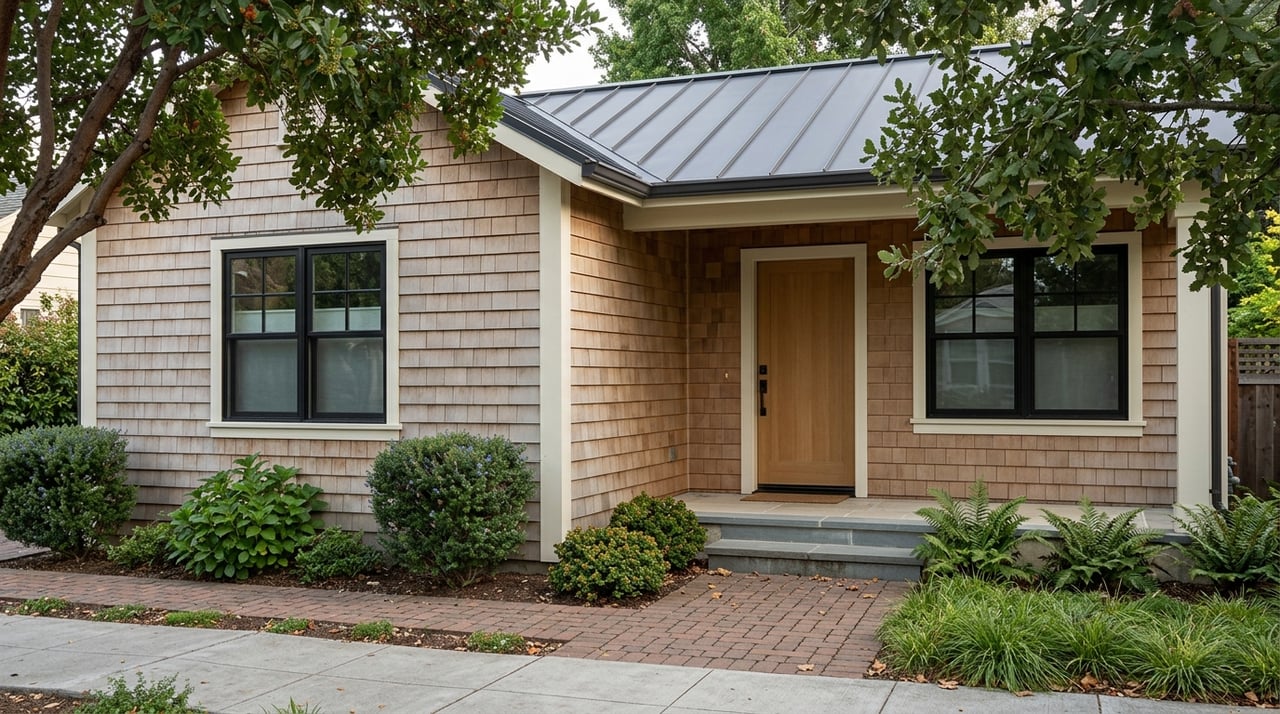
The housing pattern around Larkspur’s core is not typical suburban sprawl. City planning and housing documents point to a layered mix of older homes, compact infill, and smaller attached or mixed-use housing near downtown. That blend helps the area feel more village-like than auto-oriented.
In Subarea 3 of the Central Larkspur Specific Plan, the city planned a primarily residential area with 58 single-family detached and cottage homes plus 27 multifamily units. That is a useful clue for buyers trying to picture the surrounding blocks. The edges of downtown were shaped to include homes in a relatively compact pattern, not just large lots pushed far apart.
Citywide, the 2020 housing mix also shows a broad range of housing types. Larkspur reported 40.8 percent single-family detached housing, 6.6 percent single-family attached, 7.6 percent small multifamily, 40.5 percent medium or large multifamily, and 4.5 percent mobile homes. For buyers, that variety can create a more layered housing environment than in communities dominated by one single format.
Scale and lot size shape the feel
Part of downtown Larkspur’s appeal is visual scale. The city’s housing analysis identifies some downtown infill opportunities on parcels as small as 5,000 and 4,300 square feet, along with one site shown as two 7,500-square-foot parcels. It also notes that remaining residential land in Larkspur is often constrained by steep slopes, irregular topography, access issues, and unstable soils.
The average single-family lot size is about 0.2 acres. That helps explain why many homes near the core feel relatively compact and closely connected to the surrounding street pattern. Buyers who want a more intimate neighborhood setting often notice that difference right away.
Current zoning also helps preserve a lower-mass residential look. In the city’s R-1 district, standards include a 20-foot front setback, variable side setbacks by lot width, a 15-foot rear setback, 40 percent maximum lot coverage, and a 30-foot maximum building height. In practical terms, many homes read as modest, low-profile structures instead of oversized buildings that dominate the lot.
Everyday convenience goes beyond charm
A walkable district works best when it is supported by real mobility infrastructure. In Larkspur, that support extends beyond downtown storefronts. The city says it has seven miles of bike and multiuse paths, along with facilities such as the Sir Francis Drake bike and pedestrian bridge, the Sir Francis Drake pedestrian overcrossing at the ferry terminal, and the Ward Street bike path.
The city’s bicycle and pedestrian master plan states that walking and biking are meant to be integral to daily life and to support trips to shops, work, and school. That matters because it shows walkability here is not just aesthetic. It is built into how the city thinks about getting around.
For buyers, that can expand the practical value of living near the core. A walkable address may also connect more smoothly to broader daily routines, whether that means local errands, recreation, or a more flexible way to move through town.
Regional access adds another layer
Many buyers want a small-town setting without giving up regional connectivity. Larkspur offers that through the Golden Gate ferry terminal and the SMART station. SMART’s Connect Larkspur shuttle links the station with the Golden Gate Larkspur Ferry Terminal.
That combination can be especially appealing if you want options beyond a car commute. It supports access to the broader Bay Area while allowing you to come home to a more compact and historic town center. For some buyers, that balance is a major reason Larkspur stands out within Marin.
The city’s code also reflects a transit-oriented mindset. Some housing and ADU standards provide different treatment for properties within walking distance of a major transit stop, including parking relief and added flexibility for certain small units. That is another sign that walkability is embedded in local planning rather than simply promoted as a lifestyle concept.
Why supply can feel limited
Buyers are often drawn to places that feel preserved and established. In Larkspur, those same qualities can also limit how much new housing enters the market near the core. City planning documents emphasize preserving old downtown character and pedestrian orientation, and the historic resources inventory is subject to the Heritage Preservation Ordinance for discretionary review in many cases.
When a place protects its historic form and scale, it usually does not add large amounts of new inventory quickly. That can help maintain character, but it can also make well-located homes feel harder to find. If you are shopping near downtown, scarcity can become part of the buying equation.
The city’s housing project processing page adds context here. It notes that recent approved housing projects have been mainly single-family homes and ADUs, with no duplex, apartment, or other housing-type applications approved in the last 10 years. That limited pipeline helps explain why resale opportunities near the walkable core may attract strong attention.
Buyers are often paying for lifestyle
Larkspur is already a premium market. In the city’s 2023 to 2031 housing element, Marin County Assessor data show a 2023 median detached single-family home price of $2,412,500 and a median condo or townhome price of $749,000. The same source reports that 59 percent of single-family homes were above $1 million in 2024.
Those numbers matter because they frame the local market before you even isolate the value of downtown proximity. A home near the walkable core may compete not only on its own features, but also on the convenience and identity tied to its location. Buyers are often paying for the ability to enjoy more of daily life within a compact area.
Broader research supports that pattern. Studies cited in the research report found that more walkable neighborhoods generally command higher prices and that walkable single-family neighborhoods retained more value during a market downturn than comparable unwalkable ones. While every property is different, the practical takeaway is simple: buyers often place real value on convenience, reduced driving, and a stronger sense of place.
ADUs and evolving housing flexibility
Accessory dwelling units are also part of Larkspur’s current housing picture. The city defines an ADU as attached, detached, or contained within an existing residence or accessory structure. It also offers pre-reviewed detached ADU plans.
For some buyers, that adds flexibility worth exploring. Depending on the property, an ADU may support changing space needs over time. Even if your main focus is the primary residence, it is useful to know that ADUs have become an important part of the local housing conversation.
What this means if you are home shopping
If you are searching in Larkspur, the walkable core offers more than atmosphere. It combines historic character, mixed-use planning, compact residential scale, bike and pedestrian infrastructure, and regional transit connections. That is a rare mix, especially in a high-demand Marin setting.
It also means you may need to move with clarity when the right home comes up. Limited supply, preserved character, and premium pricing can all shape competition. The more clearly you understand what matters most to you, the easier it becomes to evaluate whether a home near downtown Larkspur truly fits your goals.
If you are weighing Larkspur against other Marin neighborhoods, it helps to compare not just square footage and price, but also how you want to live day to day. For many buyers, that is where Larkspur’s walkable core makes its strongest case.
If you are considering a move in Marin and want a clear read on how Larkspur fits your goals, Raquel Newman offers thoughtful, high-touch guidance rooted in local market knowledge.
FAQs
What is the walkable core in Larkspur, CA?
- Larkspur’s walkable core is centered on Magnolia Avenue and Larkspur Plaza in and around historic downtown, including the area between the Lark Theater and the Lark Creek Inn.
Why do homebuyers like downtown Larkspur?
- Buyers are often drawn to downtown Larkspur for its historic setting, mixed-use layout, pedestrian-oriented design, and access to shops, dining, and daily conveniences in a compact area.
How does transit affect Larkspur homebuyer appeal?
- Larkspur offers regional access through the Golden Gate ferry terminal, the SMART station, and the Connect Larkspur shuttle, which can make the area appealing to buyers who want alternatives to driving.
Are homes near downtown Larkspur limited in supply?
- Yes. City policies that preserve historic character, along with a recent approval pattern focused mainly on single-family homes and ADUs, help explain why supply near the core can feel limited.
What housing types surround downtown Larkspur?
- The area around downtown includes a mix of older homes, compact infill, attached housing, mixed-use residential space, single-family homes, cottages, and some multifamily housing.
Do smaller lots shape the feel of Larkspur neighborhoods?
- Yes. With an average single-family lot size of about 0.2 acres and zoning that limits bulk and height, many homes near the core feel lower in scale and more closely tied to the street pattern.